


By Simbarashe Muparaganda
Bulawayo, (New Ziana)— As the dawn light broke over the Mahatshula rail crossing just outside Bulawayo, the tranquility shattered with the shrill sound of the horn of a goods train as the driver tried to warn a commuter omnibus, packed with school children from nearby suburbs, against crossing the tracks.
The commuter omnibus did not make it across the tracks, as it was hit by the massive train, which was ferrying coal from Hwange to
Harare, ripping apart a lifeline for many families.
Three pupils died on impact and the harrowing scene left survivors, like Memory Ncube, haunted by the tragedy.
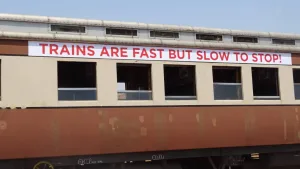
Drivers are urged to stop at all rail crossings
“The driver sped past two vehicles that had stopped for the oncoming train, which was already sounding its horn. The train crushed the vehicle, and the scene was terrible,” Ncube recalled, her voice trembling.
The tragedy at Mahatshula is one of many, as Zimbabwe grapples with a silent epidemic of rail crossing accidents with the National Railways of Zimbabwe (NRZ) saying the first half of this year alone saw 13 level crossing accidents resulting in numerous injuries and deaths.
Although these incidents rarely dominate headlines unless there is significant loss of life, they have been a persistent contributor to the grim statistics surrounding rail safety in the country.
According to the United Nations Economic Commission for Europe (UNECE), at level crossings where roads meet railway tracks, millions experience near-misses while over 6 000 lives are lost annually worldwide.
In Zimbabwe, as fatalities continue to rise, residents are left with the sobering reality of their dangers, particularly at unguarded
crossings, many of which no longer have signaling equipment due to vandalism and lack of maintenance since they were constructed decades ago.

Poor signage has contributed rail crossing accidents across the country.
The NRZ operates over 3 400 kilometres of rail track, yet the vast majority of its level crossings are devoid of basic safety measures like barriers or warning lights. In the bustling urban centres of Harare, Mutare, Kwekwe, and Gweru, some crossings rely solely on faded signage, as functioning traffic lights have become obsolete.
“People have gotten used to the danger,” said Raphel Ncube, a vendor who operates from near a level crossing in Cowdry Park.
“We know where to stop and look both ways. We’ve seen many motorists hit by trains.”
In Bulawayo, communities like Cowdry Park and Sizinda live under the shadow of imminent danger, waiting for change that seems perpetually out of reach.
In response to the alarming trend, NRZ officials expressed urgency in addressing the issues with the parastatal communications manager, Andrew Kunambura, indicating that many accidents stem from drivers ignoring basic safety rules.
“What we are witnessing is a disturbing trend, drivers ignoring the rules and assuming they can outrun locomotives. This kind of negligence is costing lives,” he said, adding to combat such accidents, the NRZ is exploring boom barrier technology, aimed at halting vehicle traffic when a train approaches.
“We successfully piloted this in the Lowveld for sugarcane transport, but cost constraints have delayed a nationwide rollout,” Kunambura
added.

NRZ and other stakeholders such as Traffic Safety Council of Zimbabwe(TSCZ) have been conducting awareness programmes at rail crossings across the country.
In parallel, the NRZ collaborates with the Traffic Safety Council of Zimbabwe (TSCZ) on initiatives to enhance safety with the two organisations launching a campaign for better visibility of signage and patrols to deter vandalism.
The landscape of rail safety in Zimbabwe reflects challenges seen across the globe, with neighbouring South Africa grappling with over 7 500 level crossings, where safety measures vary widely.
In response to rising fatalities, South Africa adopted the Administrative Adjudication of Road Traffic Offences (AARTO) Act, increasing penalties for motorists disobeying rules at crossings.
In Zimbabwe, Minister of State for Bulawayo Metropolitan Affairs, Judith Ncube proposed public-private partnerships to construct flyovers at critical crossings, emphasising the need for long-term solutions.
“We have seen a marked increase in accidents at railway crossings, leading to unnecessary loss of life,” she acknowledged.
With freight transport expected to increase under the government’s reindustrialisation drive, the dangers at rail crossings will continue
to multiply if protective measures are not implemented urgently.
New Ziana